
Many of the works on paper that were done by Boleslaw Cybis during the 1930s are noticeably different from those he produced in the previous decade. Most of them can be divided into four distinct genres: portraits of Polish people in historical or ethnic costumes; portraits and landscapes during his stay in Libya; landscapes from his stay in Italy; and the summer-1939 drawings of Native Americans.
Historical Polish Costumes
Some of these were reproduced by the Cybis studio as lithographs during the early 1970s, although they do not appear in any of the studio’s price lists or catalogs and so they may only have been promotional items.
The items shown below all appeared in the 2019 and 2010 studio-liquidation lots at Kamelot Auctions in Philadelphia.
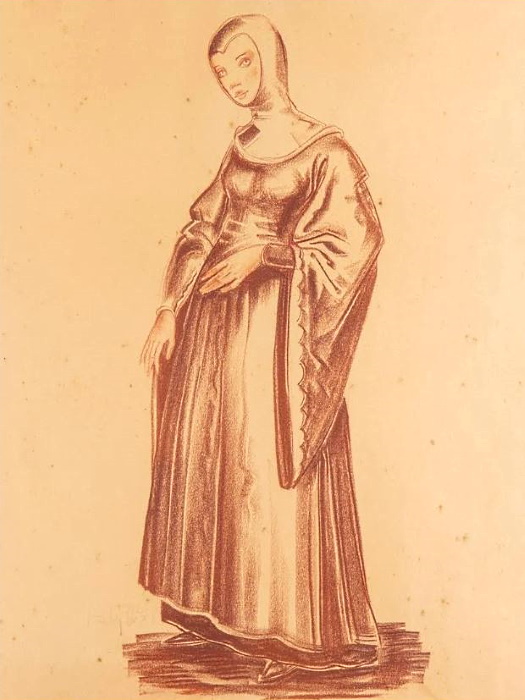 The title of ‘Townswoman’ is derived from a handwritten notation on the back of the drawing: “Mieszczanka” – Polish historical dresses – city girl – 16 of” which suggests that this may be the sixteenth drawing in a series portraying medieval Polish citizens in various styles of clothing. It is sanguine (red) crayon on paper, measures 12” x 15” and is signed B Cybis 1930. It is not known who made the notes on the back. This was originally sold by Kamelot Auctions, Philadelphia, in March 2020 in an inexpensive frame that had water damage to the cardboard backing.
  This peasant woman in a blue dress was described as mixed media on paper with an image size of 21” x 16”. Close inspection reveals a very faint B Cybis signature in pencil just to the right of the flagstone she is standing on. However, there is a big problem with the signature that is at the lower left corner of this item!
 The upper signature is what appears at that lower left location. The lower signature is an actual Boleslaw Cybis signature. They are obviously not the same! The faux signature was clearly applied with a ballpoint pen. History tells us that although the ballpoint pen was invented in 1888, it was not patented until 1938 and was not available on the American market until 1945; they did not become really common until the late 1950s/early 1960s. So, not only is the signature on this drawing (or print?) not a match for Boleslaw Cybis’ handwriting, but it was applied by someone at the modern Cybis studio several decades after the drawing was created. This item was described by the auction house as “signed lower left” which is technically true…except that the lower left signature is not that of Boleslaw Cybis, although the one within the image space is.

 I am calling this the gentleman in black and white coat. It was described as mixed media on paper, and 21″ x 16″. The signature style is accurate.

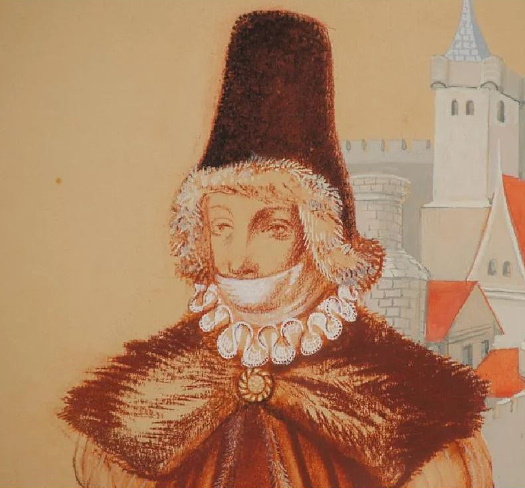 With this mixed-media drawing we step into a bit of a quagmire because it is among those that the modern studio (possibly during the early 1970s) reproduced as lithographs. When offered by Kamelot in June 2019, they titled it as “Elizabethan Royalty” which is ridiculous; Boleslaw Cybis never drew portraits of Britons of the Tudor period, which is what “Elizabethan” means. These are Polish costumes. Because it’s difficult to tell whether this is a man or woman, let’s just title this drawing ‘Polish aristocrat.’ Image size is 22.5” x 17” and it has a typical B Cybis signature in pencil over a rock in the lower right corner. (For comparison, the size of the reproduction lithograph is only 15.5” x 12”.)
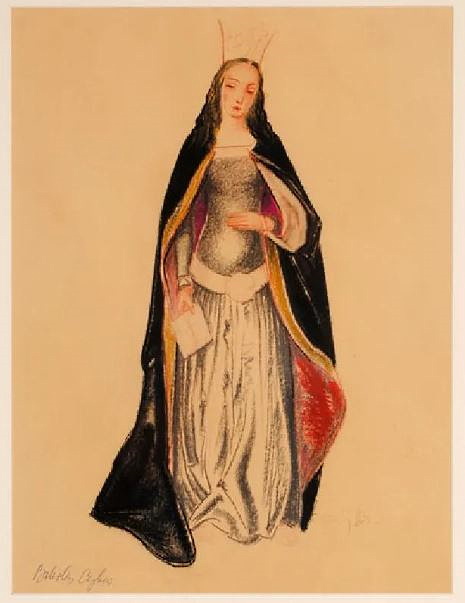
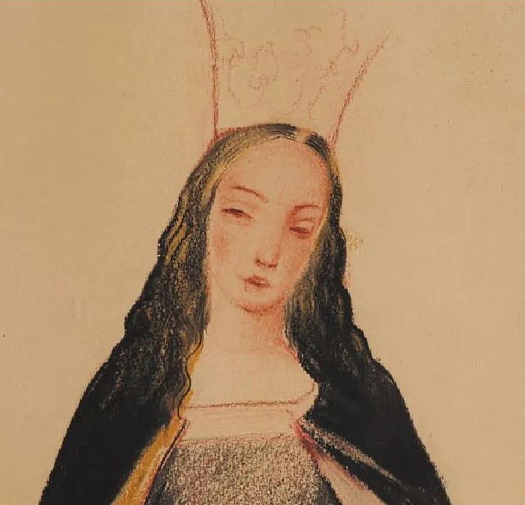 Here is another problem-signature item, sold by Kamelot in that same 2019 sale. This is another that has a faint B Cybis signature on the righthand side but also a fake Boleslaw Cybis signature in ballpoint pen at the lower left. Image size is 21” x 16”. An appropriate title for this drawing would be Duchess.
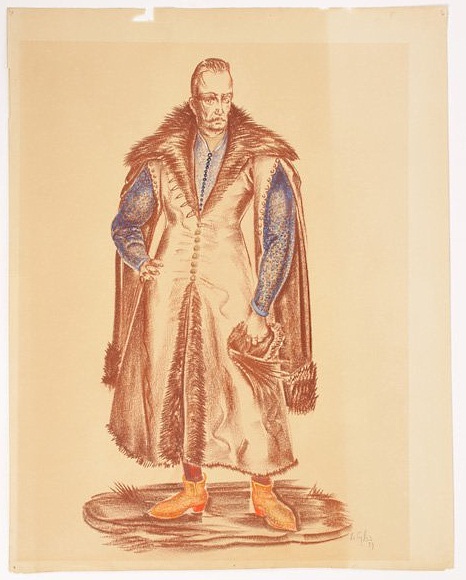
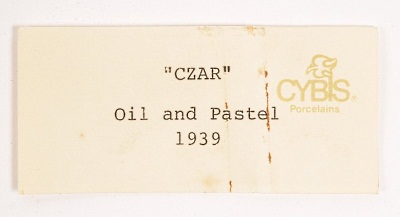 This drawing, described by Kamelot in a June 2013 auction lot as oil and pastel on paper, is 23” x 18”. It was sold with a Cybis studio paper tag affixed to the back, titling it “Czar.” Clearly, this was an item that the studio had sold directly to someone, probably after 1990 when they began selling various legacy items to visitors. This work is signed in pencil B Cybis 1939 at the lower right corner. A far better title for this drawing would be Pana (a male of the nobility.)
The drawings of the peasant woman in blue dress, Duchess, Polish aristocrat, Gentleman in black and white robe, and two others shown in the next section (six in all) were all housed in inexpensive mass-market metal frames with cardboard backers, probably purchased by the studio during the late 1960s or early 1970s.
As mentioned earlier, some of the original 1930s drawings were later reproduced as lithographs although the extent of their distribution was probably very small. If any of those were subsequently framed, they can be quickly distinguished from the originals by comparing the image area sizes: the original drawings are between 21” and 23” high and 16” to 18” wide, while the print/lithograph image areas are approximately 16” high x 12” wide. In other words, the reproductions are about 25% smaller.
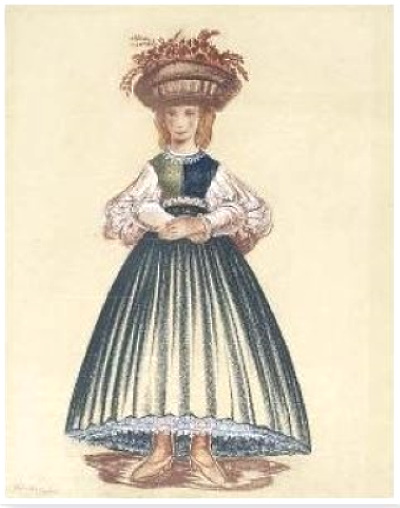 Unfortunately, I have no way of knowing whether this depiction of a girl in a flower crown hat is an original print or a 1970s lithograph, but just in case it is an original I am including it here. The flower crown/hat is reminiscent of the studio’s much later sculpture The Bride, which was based on a Cybis oil painting and has its own Archive post. No details were provided and the original photo was quite small; it required some zooming to see any detail. There appears to be something written in the lower left corner but it’s impossible to tell whether it is the same faux signature as seen on the others.
The Libyan Drawings
Although the Cybis in Retrospect museum catalog timeline says that Cybis lived in Tripoli (Libya) in 1932, several of these original drawings done of the inhabitants are clearly dated 1930. This is not the first discrepancy noted in Cybis publications, and so we will defer to the year (1930) that Cybis himself put onto his work at the time! The exhibit catalog is clearly incorrect in this regard.
Unless otherwise noted, the photographs are from DESA Unicum (Warsaw) auction lot listings offered in 2020 and/or 2021.
 Young black man’s head, 1930, charcoal on paper, approx. 10” x 8”. It is inscribed TRIPOLI at the lower right, which should settle the who/when/where question once and for all.
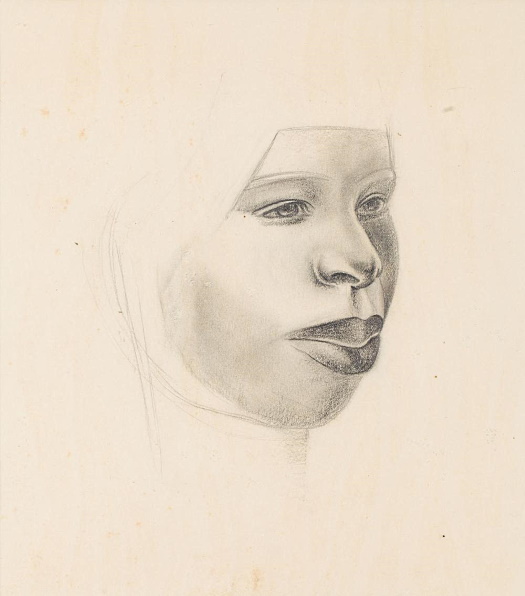 Young black girl’s head, 1930, charcoal on paper, 10” x 9”
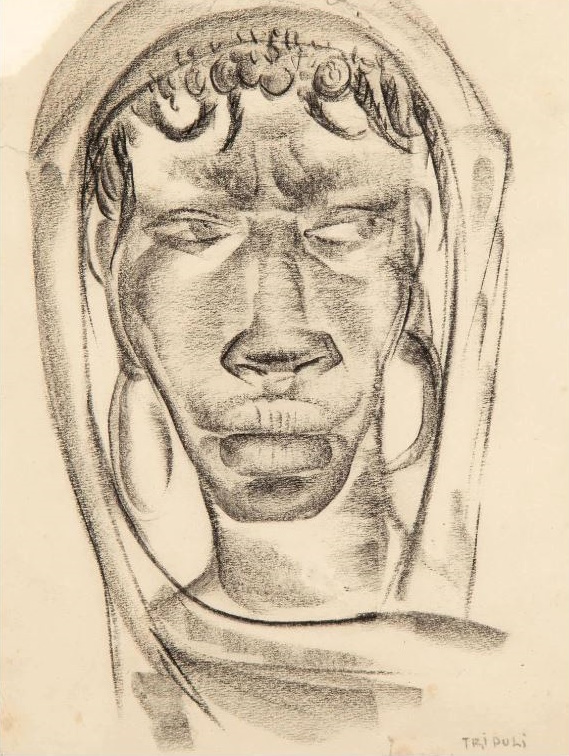 Head of a black woman, approx. 10” x 8”. Charcoal on paper, penciled at lower right TRIPOLI
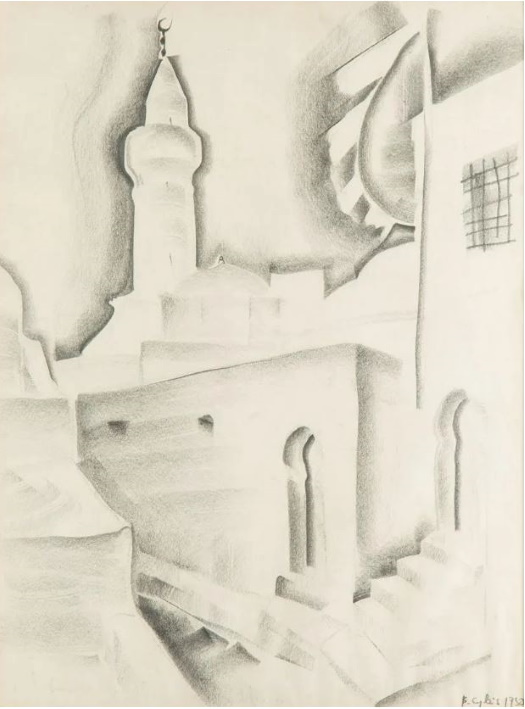 Mosque, crayon on paper, 19” x 14” signed and dated lower right B. Cybis 1930
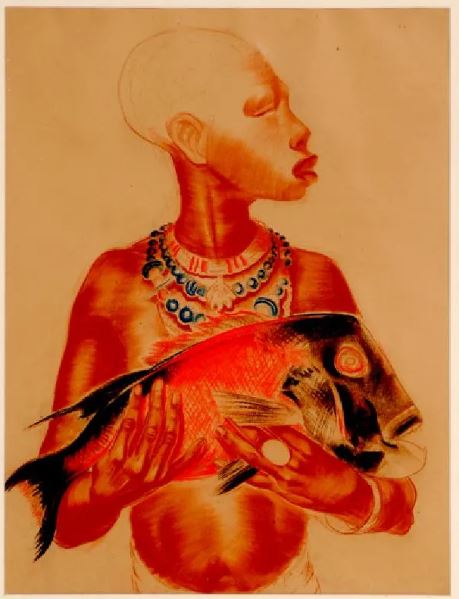
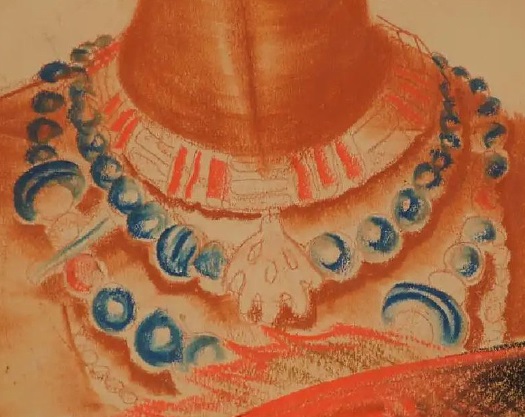 African woman with fish, mixed media on paper, 22” x 17” and described as unsigned. Not dated but likely 1930.
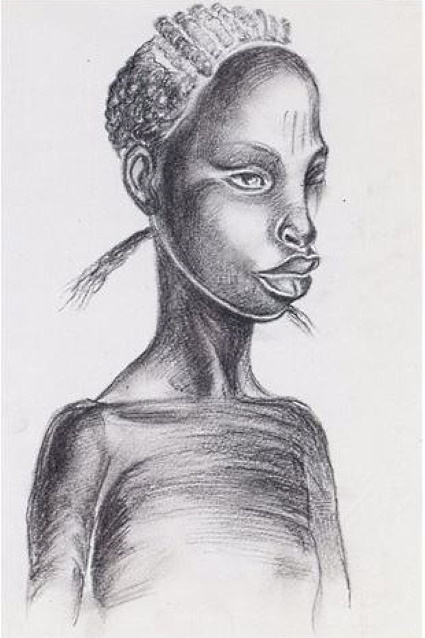 Bust of black woman, charcoal on paper, approx. 11” x 7.5”.
 Black woman with large earring, charcoal on paper, approx. 11.5” x 8”.
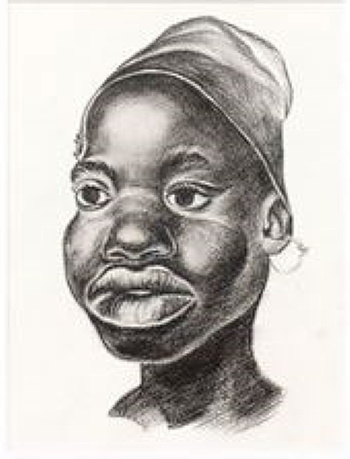 Head of black boy with cap, charcoal on paper, 11.5” x 8.5”.
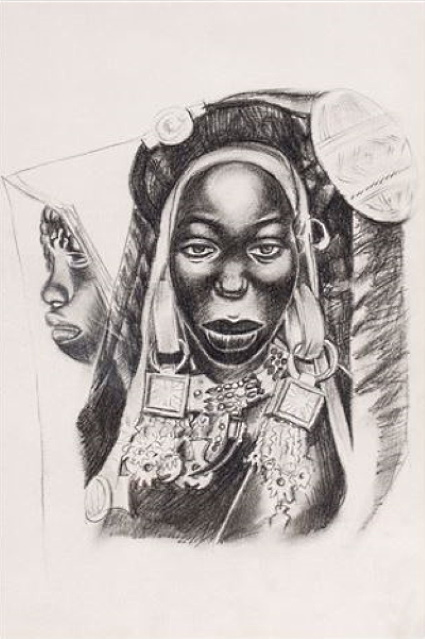 Two black women, one with ornate necklace and earrings, the other in a plain headscarf; charcoal on paper, approx. 13” x 9”.
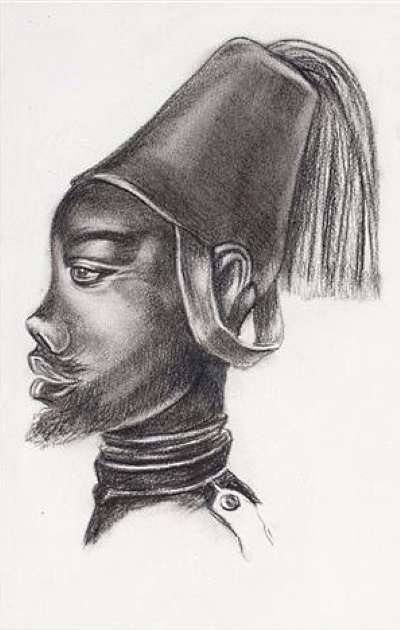 Libyan man with fez, charcoal on paper, 11.5” x 7.5”, titled Glowa meczyzny w fezie (“man’s head in fez”.)
 An African Woman, ca 1930, charcoal and crayon on rosin paper, approximately 8” square
 Cacti, ca 1930, charcoal on paper, 19” x 15”
 Cactus, approximately 19.5” x 15.5”. Watercolor, charcoal, and sanguine crayon on paper.
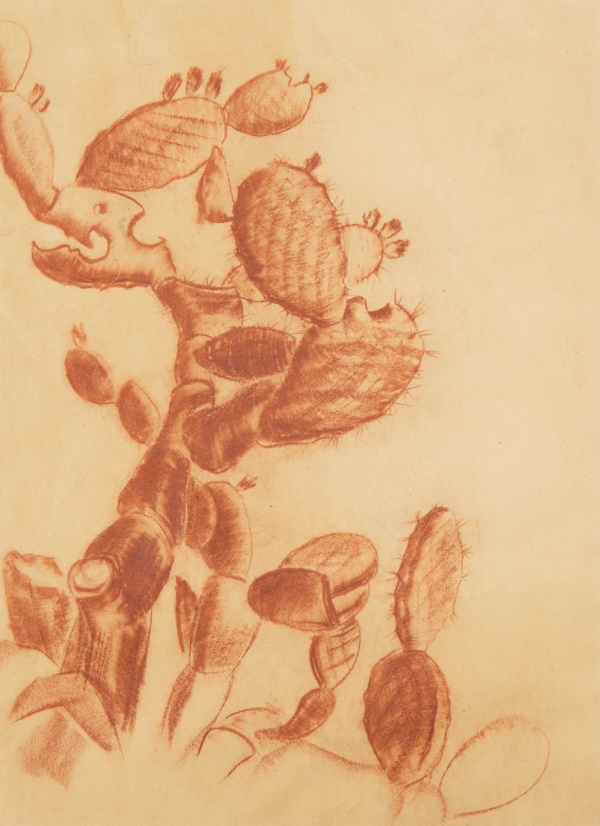 Cactus Plants, sanguine on paper, approx. 19” x 14”, ca. 1930
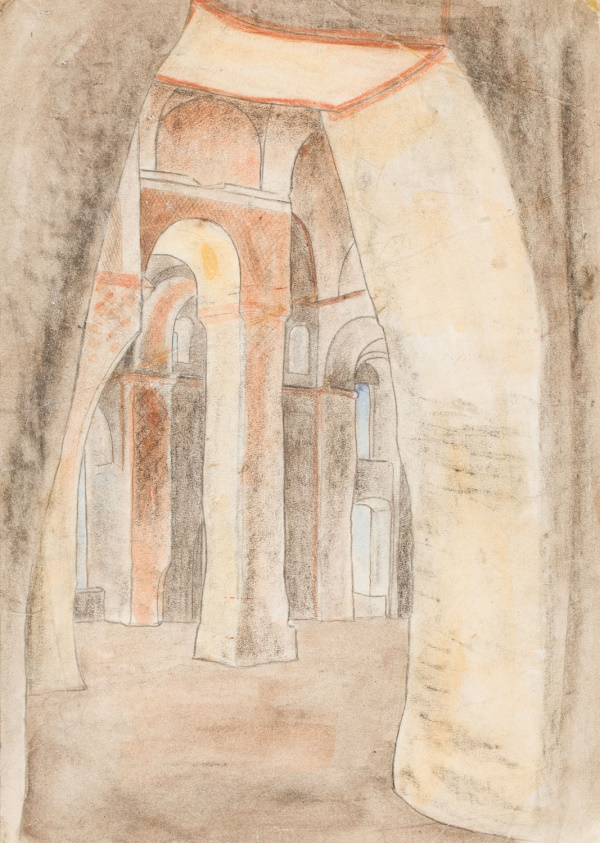 Interior of an Old Christian Temple Viewed through Archway, watercolour, pencil and crayon on paper, approx. 14” x 10”, ca. 1930
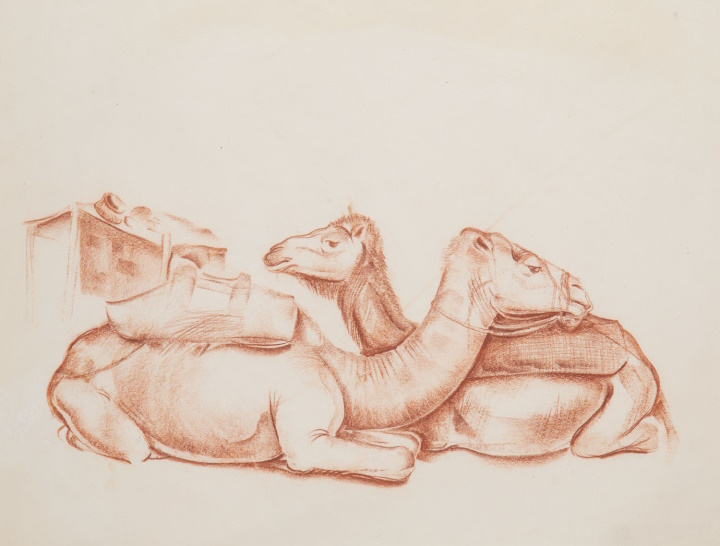 Camels, sanguine on paper, approx. 16” x 20”, ca. 1930
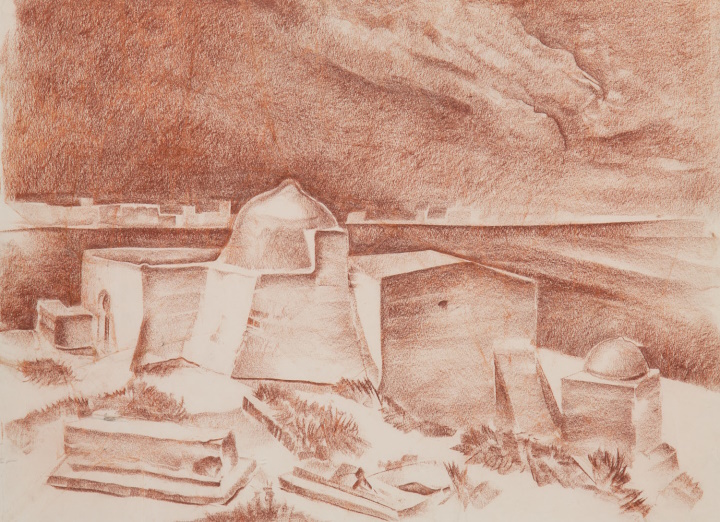 Eastern Landscape with Arab Buildings, sanguine on paper, approx. 15” x 20”, ca. 1930
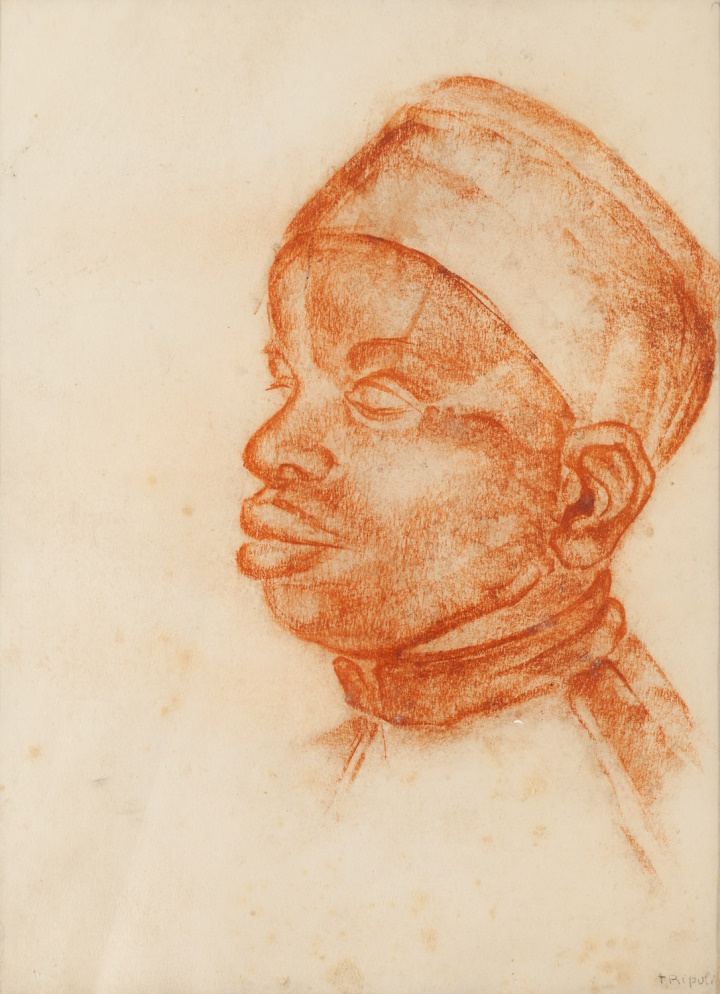 Portrait of a Negro Boy in a Fez, sanguine on paper, approx. 12” x 9”, ca. 1930, noted
at lower right: TRIPOLI.
There was only one original piece of art from Boleslaw’s Libyan period in the 1970-71 Cybis in Retrospect museum exhibit in Trenton; all the rest were photographs. This was a pastel-and-conte sketch of three people, supposedly created as a preliminary study for an eventual painting. Given the name People of Libya, it was owned by the Cybis studio at that time but may have been sold in later decades. It was not pictured in the exhibit catalog.
The Italian Drawings
To date, these have been all landscapes and no portraits found, though that doesn’t mean there weren’t any.
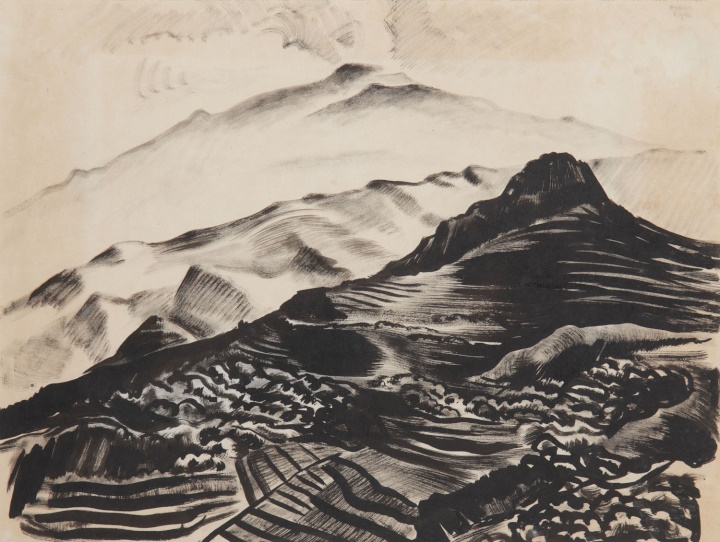 Etna, watercolor and ink on paper, 14″ x 20″. Signed and titled (faintly) in the upper right as Etna|B.Cybis.
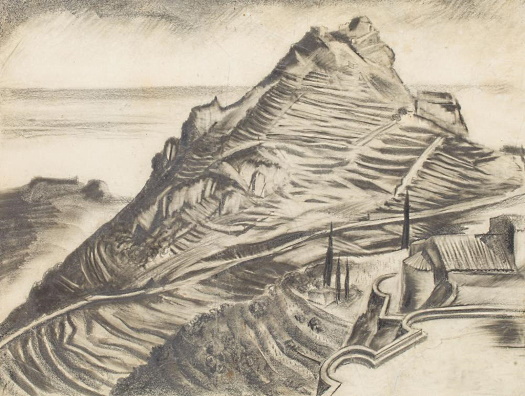 Italian landscape, 1930, charcoal on paper, 15” x 19”.
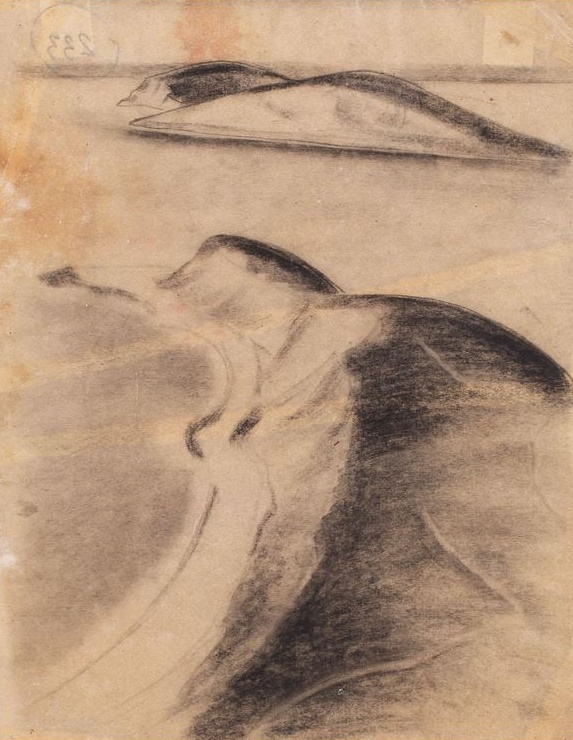 Coast in southern Italy, 1930. Carbon pencil, approx. 12” x 9”.
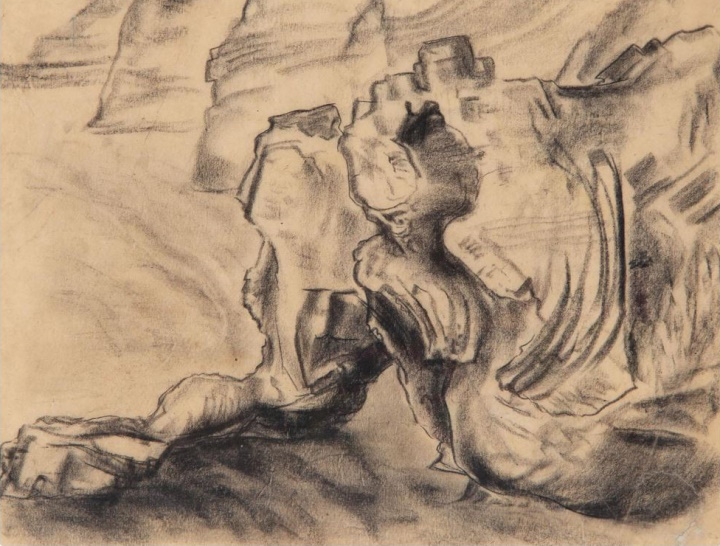 View of a rocky bay (‘Rocky Coast’) circa 1930. Carbon pencil, approx. 9” x 12”.
 Sicilian landscape, ink/paper, 15” x 19”.
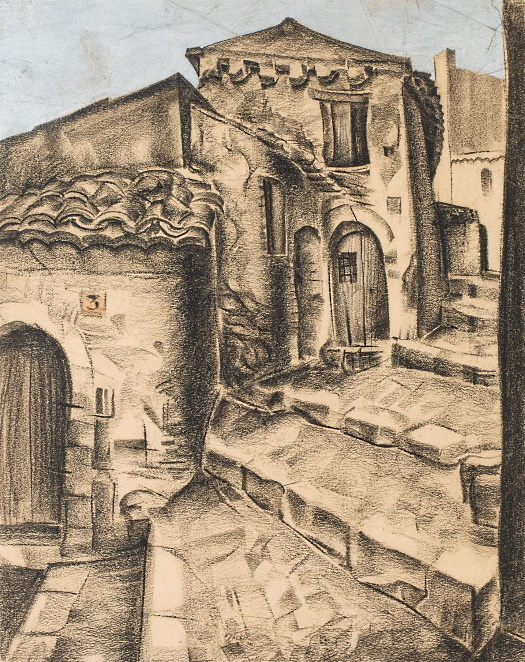 Stairs in Castel Molo, 1930, charcoal, mixed media on paper, 17.5” x 15”. Castel Molo is a village in the mountains of Sicily, roughly between Palermo and Messina. The road leading up to the old Saracen castle at the peak is comprised of more than 600 steps! I wonder how far up Boleslaw was when he stopped to sketch this?
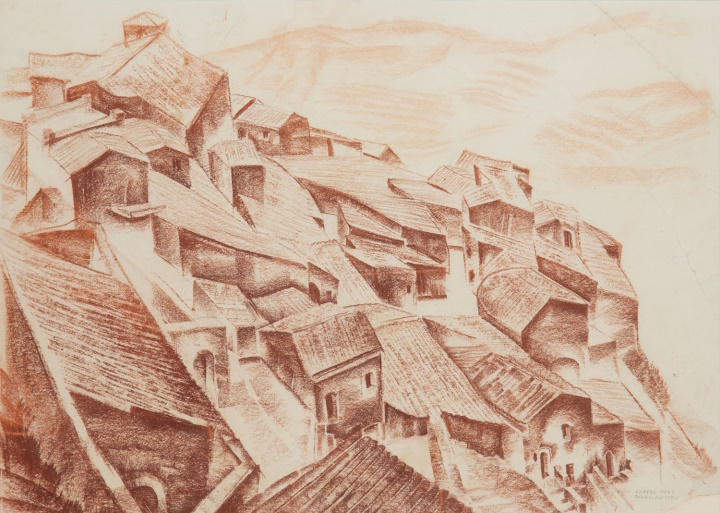 Panorama of Castel Molo, sanguine on paper, approx. 13” x 19”, ca. 1930. Signed in pencil at lower right: CASTEL MOLO | BOLESŁAW CYBIS
 Norman castle in Sicily, carbon pencil on paper; approx. 12” x 9”.
 A Norman Castle in Sicily, charcoal on paper, approx. 9” x 12”, ca. 1930
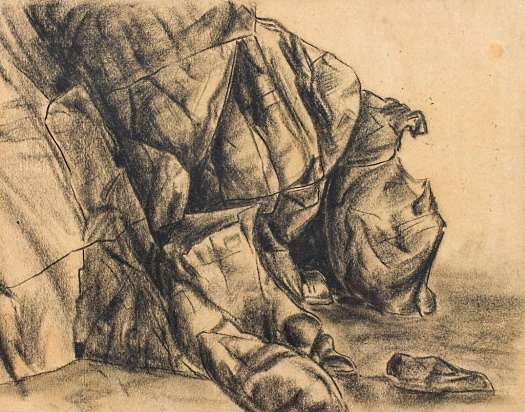 Rocks at Capri, 1930, crayon on paper mounted on paperboard, 9” x 12”.
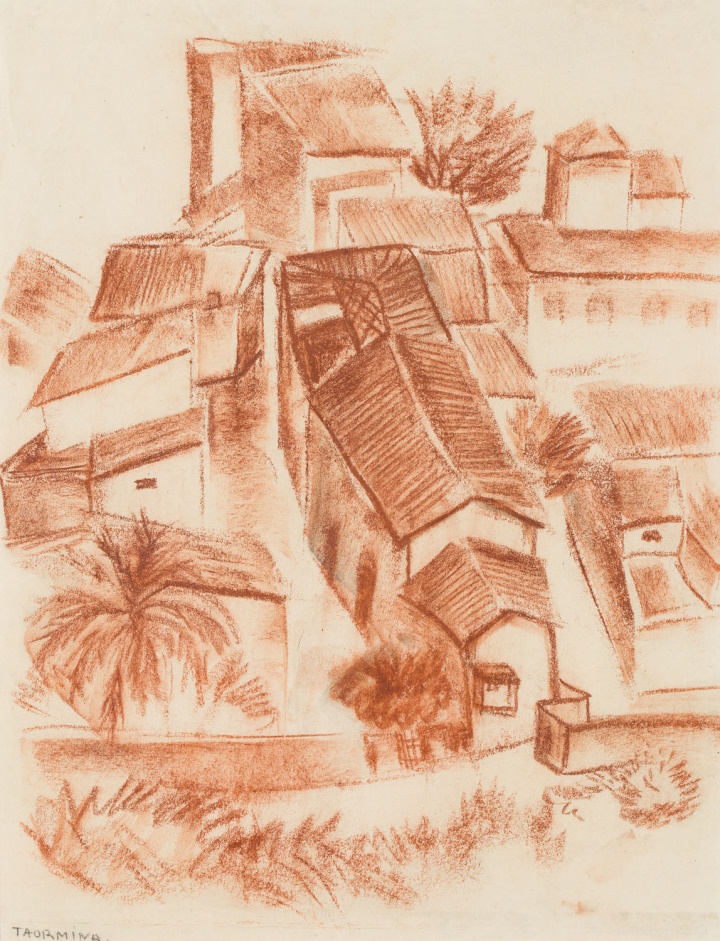 Taormina, sanguine on paper, approx. 10” x 7.5” , ca. 1930
Other 1930s Drawings
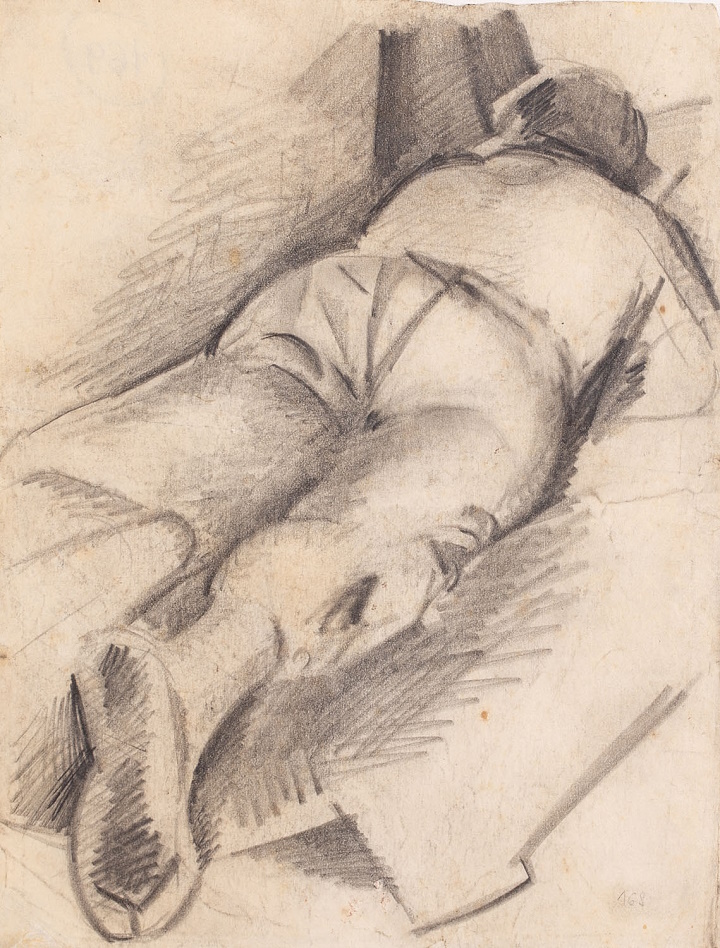 A pencil sketch of a man lying on his stomach, circa 1932-1937, measuring approximately 9″ x 6″.
 Portrait sketch of a woman with a dove, charcoal on paper, 1934-1935. Size is 25″ x 17.”
 Head of Woman in the Italian style, watercolor and gouache on paper. This is quite small at approximately 5” square.
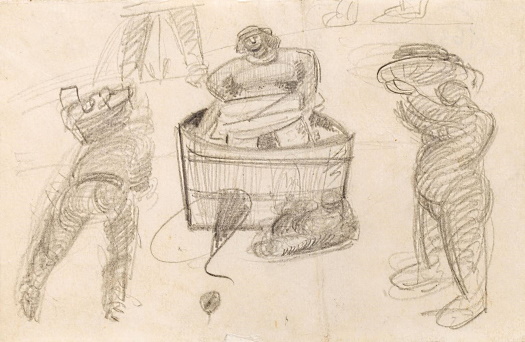 This pencil 5” x 7” pencil drawing has been titled In the Tub, circa 1935-1937.
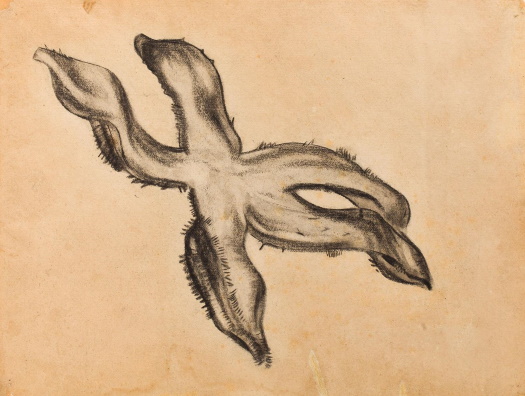 From the same estimated time period, we have a Starfish in charcoal on paper, 9” x 12”.
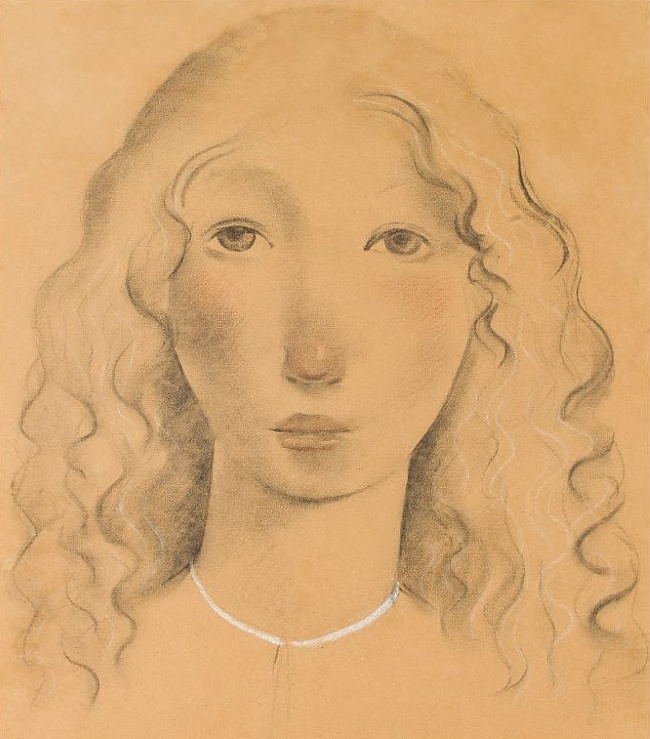 Head of Young Lady done in chalk, sanguine crayon, and charcoal; approximately 18.5” x 15”.
The 1937-1938 drawings for the ‘Polish Sky’ ceiling in the auditorium of the Pilsudski School in Gdansk are shown in their own Archive post.
Portraits of Native Americans (1939)
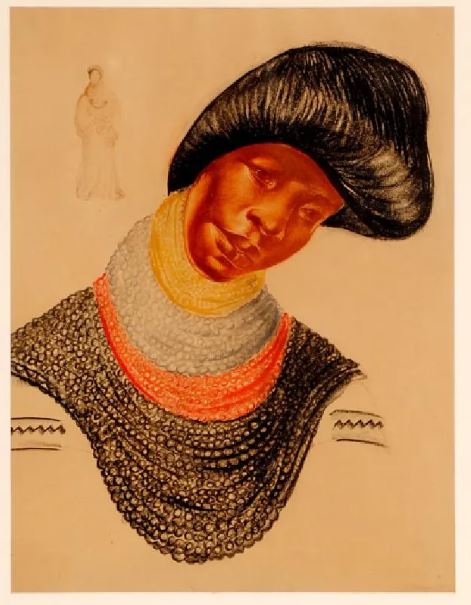 Black Seminole Woman, mixed media on paper, 22” x 17”, described as circa 1939. In February 2024, I became aware that my original identification of this as an African woman was incorrect. The Black Seminole community (also known as Black Maroon and Seminole Maroon) did not originate as a Native American tribe but were runaway slaves from South Carolina and Georgia during the 18th century. That particular group of slaves are known as the Gullah, and were descended from slaves who previously lived on the rice-growing regions of West Africa in the Niger delta. The Gullah, and the Black Seminoles, retained much of their African culture and even have their own language which is known as Gullah Geechee. It is the only distinctly African creole language in the USA. The unique characteristics of the Black Seminole community explains why their facial features and dress are different from the native Seminole and other Native American tribe members.
 The Native American portraits drawn by Cybis during his Summer 1939 trip through the American Southwest formed the basis for the 1970s-studio Folio One set of limited-edition prints. They have their own Archive post; the collage above shows the retail set. Two of the originals (one of a Shoshone chieftain, and an unknown other portrait) were given by Richard Nixon to the People of Poland in 1972. The other seven original drawings supposedly remained with the Cybis studio but their ultimate disposition is not known.
The next overview of drawings by Boleslaw Cybis focuses on works from the 1940s.
Browse all of the Boleslaw Cybis paintings and drawings posts
Name Index of Cybis Sculptures
Visual Index (for human figures/busts only)
About the Cybis Reference Archive
What is Cybis?
Images of Cybis porcelain sculptures are provided for informational and educational purposes only. All photographs are copyrighted by their owner as indicated via watermark and are used here only as reference material. Please see the copyright notice in the footer and sidebar for important information regarding the text that appears within this website.
The Cybis Archive is a continually-updated website that provides the most comprehensive range of information about Cybis within a single source. It is not and never has been part of the Cybis Porcelain studio, which is no longer in business.
 THE CYBIS ARCHIVE