
Two of the most popular genre collections from the Cybis studio are the subject of a special exhibit at the Museum of American Porcelain Art in Ohio. The exhibit, titled Circuses & Carousels, is housed – most fittingly – in a room whose construction evokes the inside of a circus tent and/or the top canopy of a carousel! I had the privilege of working closely with the Museum’s curator last year during the preparations for the exhibit.
The Setting
First, a word about the historic estate that houses the Museum. The mansion was built in 1928 by William E. Telling who had made his millions in the Ohio dairy industry. His company expanded into multiple states and, by 1930, had become the Sealtest Foods division of what is now Kraft Foods Inc. The brand name ‘Sealtest’ derived from the original early-1900s paper caps on the glass milk bottles sold by the Telling-Vernon dairy: The caps were stamped “sealed and tested.”
The Telling mansion was designed by John Sherwood Kelly and is mostly in the French Normandy style, although various influences from Tudor, Victorian, and Georgian architecture are also in evidence. It was completed in 1931 at a reported cost of $700,000 – at least $10mil in today’s money. It had 26 rooms (six bedrooms, five full bathrooms, and two powder rooms) and totals almost 10,000 square feet. After Mr. Telling’s death in 1938, the property was sold to an investor who divided the main house into eight apartments which he rented to war brides; the gatehouse was the owner’s private residence. In 1951 the estate was sold to the Cuyahoga County Public Library for $82,000; the house was listed in the National Registry of Historic Places in 1974.
In 1976, the attached Gardener’s Residence was leased to the South Euclid Historical Society whilst the Library continued to operate from the main house. However, the maintenance of the property eventually became an untenable burden for the Library System and it was sold to Mr. Richard Barone in 2013 for $755,000 as the planned home for a museum of American porcelain art. It took several years (and quite a bit of expense) to renovate the mansion sufficiently to house the current Museum. The main public areas are on the first floor; future plans include a coffee shop. The second floor has exhibit rooms as well, one of which was chosen for the Circuses & Carousels special exhibit.
 The arrow points to the room where the exhibit is located.
All photographs in this post are courtesy of the Museum of American Porcelain Art, and are copyrighted by them.
The Exhibit
The exhibit room is hexagonal in shape and painted in a most appealing shade of blue. The ornate ceiling resembles a tent or canopy, with the original plaster pargetting design of rosettes in relief centered in each large scallop; the scallop edge design also runs along the lower crown molding. Most sculptures sit on their individual wall shelf, arranged in timeline formation according to the Cybis retail introduction year, starting in 1973.
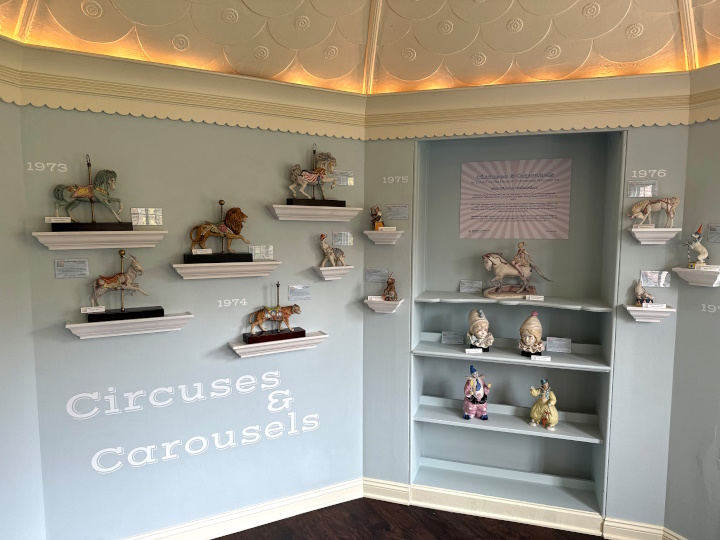 The exhibit also includes two Carl Irving Burgues clown sculptures (on the lower shelf): ‘Lollipop Louie’ on the left, and ‘Joey’ on the right. They are the only pieces in the exhibit that were not made by Cybis.
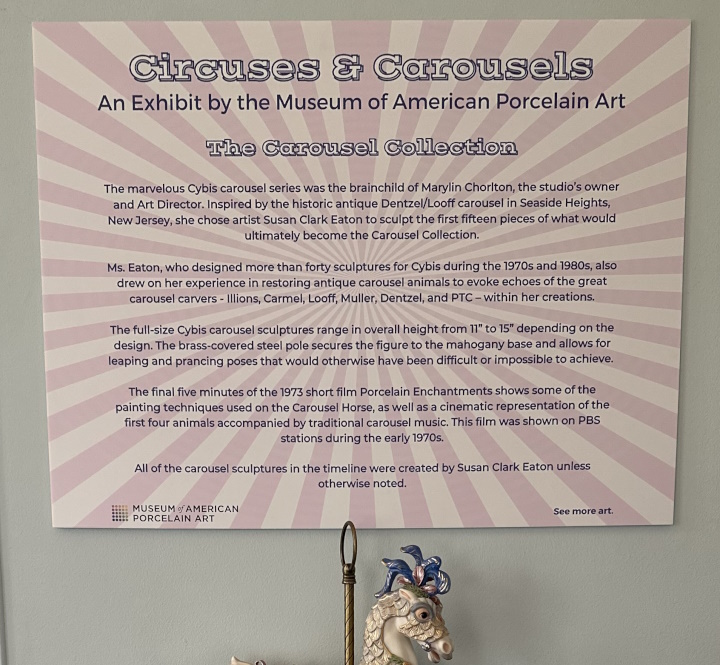 A poster explains the history behind the Cybis Carousel Collection. The Archive now contains a profile of Susan Clark Eaton.
 This wall section displays the earliest of the Carousel sculptures, along with the circus elephant ‘Alexander, He’s the Greatest.’
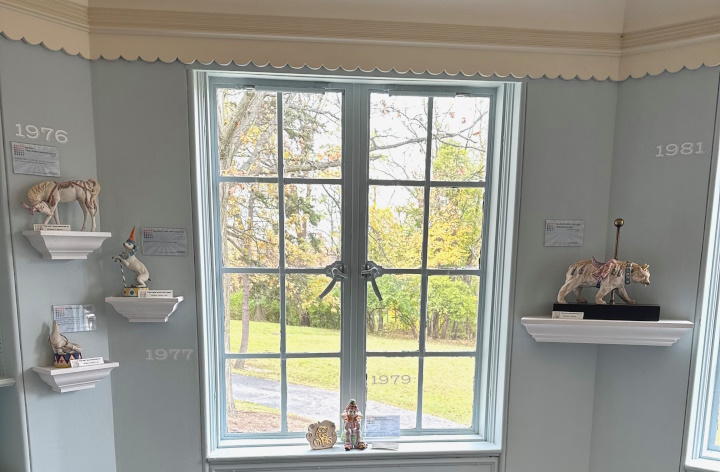 The display timeline of the circus and carousel pieces continues through the 1970s. As mentioned in the Collection Categories post, the studio combined the two genres into a single ‘Carousel-Circus Collection’ during the late 1970s but later separated them again.
 This photo offers a great view of the circus/canopy ceiling decoration. It truly does resemble a tent or carousel canopy! The recessed lighting behind the crown molding heightens the effect. The picture-frame moldings on the wall enclose line drawings of the Carousel Pony ‘Sugar Plum’ (on the left) and Carousel Unicorn.
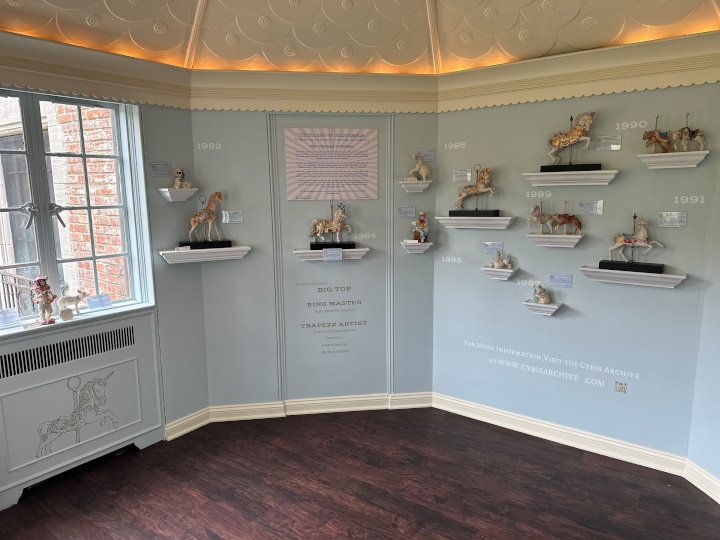 The timeline display continues into the 1990s. The four small carousel pieces on the right-hand wall are part of the 1989 Carousella series.
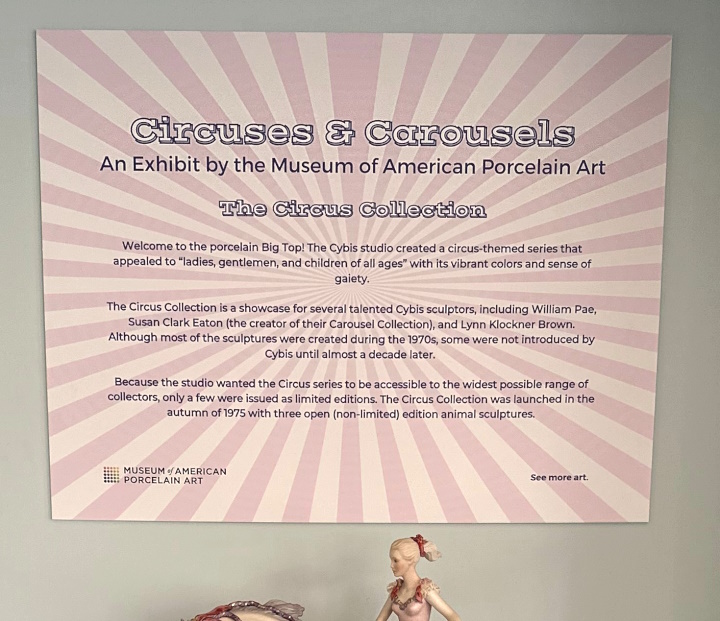 The Circus Collection poster. Unfortunately, the studio never gave public credit to their artists (a situation that this website, and the Museum, always aims to remedy.)
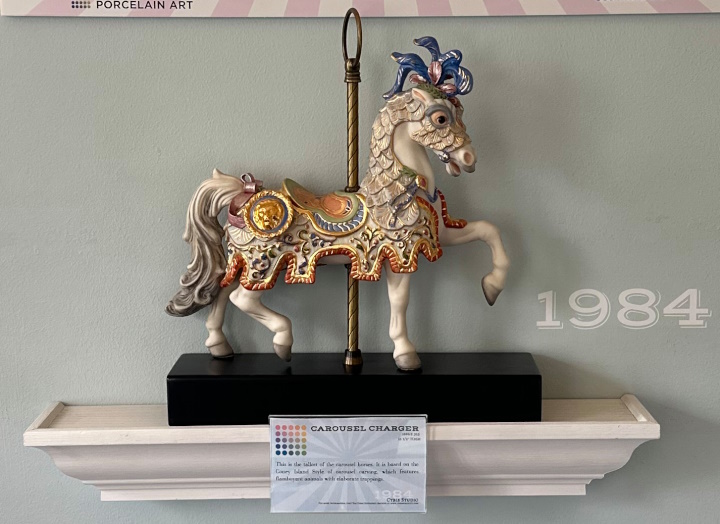 Each exhibit shelf includes an info-card about the sculpture being displayed.
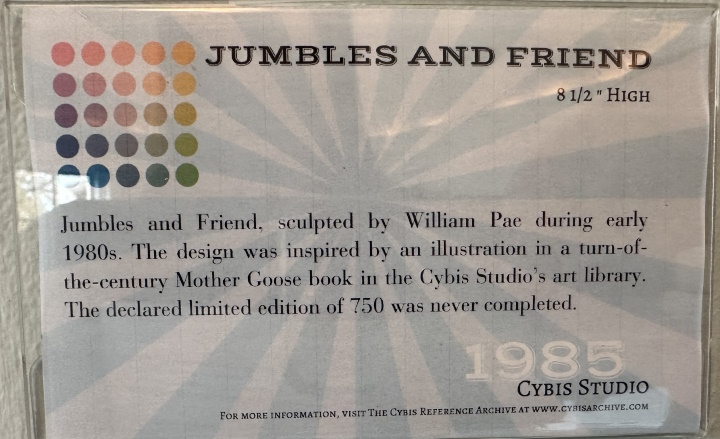 Jumbles has his own separate post in the Archive because of his rather unusual edition status!
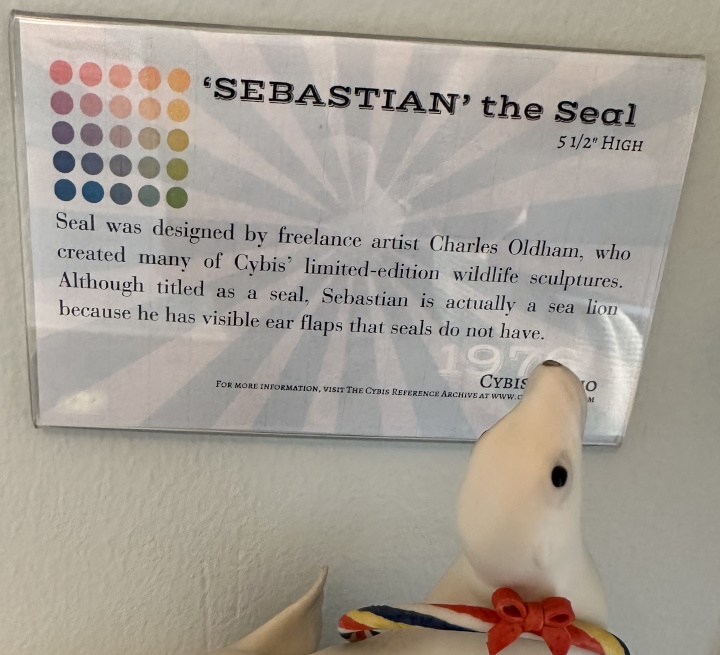 Although sculptor Charles (‘Chuck’) Oldham specifically created Sebastian as a sea lion, the Cybis studio erroneously titled him as a seal. Seals do not have the ear flaps that are clearly evident on this piece.
 The Circus Rider ‘Equestrienne Extraordinaire’, sculpted by Lynn Klockner Brown, was featured on the cover of the Museum’s newsletter this summer.
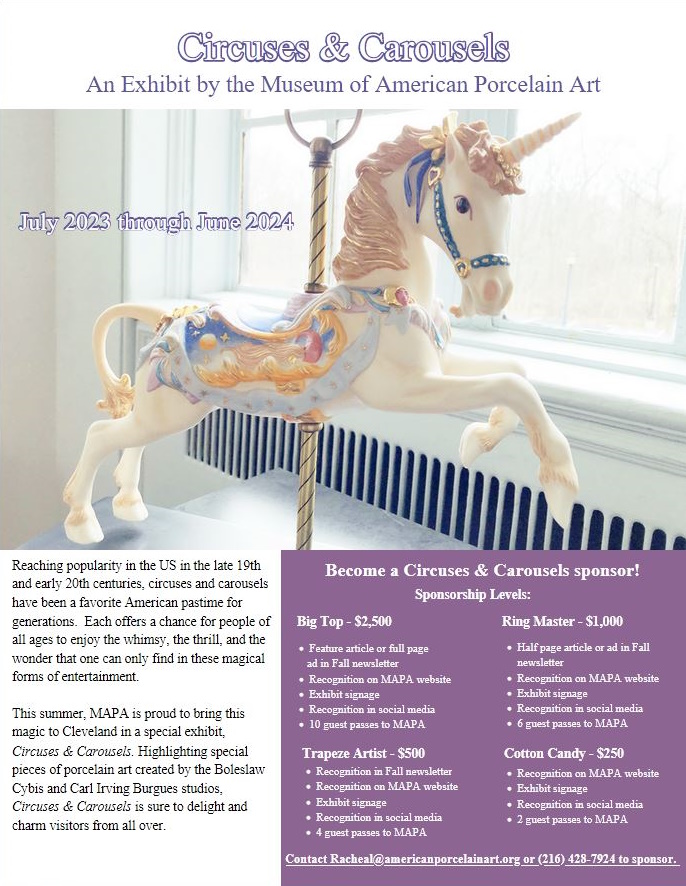 The issue also includes details about the various sponsorship levels. MAPA is a privately funded non-profit museum that appreciates and relies on the generosity of its patrons. As mentioned in my Cybis in Public Collections post, it is one of the three largest repositories of Cybis in the USA.
The Circuses & Carousels exhibit is currently slated to run through the end of next June. The museum is open to the general public on Saturdays from 10 am to 1 pm; museum Members can also visit on Wednesdays during the same hours. Mondays, Tuesdays, and Thursdays are reserved for private tours.
The MAPA website has much more information than I can go into here. Again, my sincere thanks to everyone there, not only for the photographs but for creating such a delightful exhibit of one of the most enduring of the Cybis porcelain genres.
Name Index of Cybis Sculptures
Visual Index (for human figures/busts only)
About the Cybis Reference Archive
What is Cybis?
Images of Cybis porcelains are provided for informational and educational purposes only. All photographs are copyrighted by their owner as indicated via watermark and are used here only as reference material. Please see the Copyright Notice in the footer and sidebar for important information regarding the text that appears within this website.
The Cybis Archive is a continually-updated website that provides the most comprehensive range of information about Cybis within a single source. It is not and never has been part of the Cybis Porcelain studio, which is no longer in business.
 THE CYBIS ARCHIVE