
As an in-house Cybis artist during the 1970s and 1980s, Jolan Palmai (pronounced yo-lahn pal-mee) was known for her outstanding ability as a ‘finisher’: The person who performs the critical step of ensuring that the fine detail on a porcelain sculpture is as clear and sharp as it can possibly be. Some finishers also acted as the mounter, or assembler, which is the actual putting-together of the different mold castings into a complete piece. See the Art of Making Art Porcelain and Putting It All Together posts for a closer took at the production process.
Jolan was born on July 22, 1939 in Eger, Hungary to her parents Jeno and Ester Elek. This means that she was only an infant when her home country entered what would become World War II in an association with Hitler’s Germany. The politics of Eastern Europe became a hot mess during the subsequent several years, culminating in the Russian occupation of Hungary in 1945. The teenage Jolan Elek, having shown a strong interest and skill in art at a young age, obtained a position at the Herend Porcelain Studio in Budapest during the early 1950s. However, she and her family were caught up in the Hungarian Revolution of 1956 and were among the thousands of Hungarians who became refugees, first to Austria and then to the United States.
A chance meeting with Helen Boehm gave the 17-year-old Jolan the opportunity to come to Trenton and work at the Boehm studio, learning to produce and to decorate art porcelain. At the age of 20 she married fellow Hungarian Nandor Palmai; they eventually had a son and two daughters. When her compatriot Laszlo Ispanky departed Cybis in 1965, she was one of the artists whom he hired for his first solo studio; her skill as a finisher and decorator so impressed Ispanky that he eventually gave her the position of Art Director during the years when the Ispanky operation was a division of Goebel. When that partnership dissolved during the early 1980s, Jolan went to work for the Cybis studio as a finisher.
The 1980s were a tumultuous time in the Cybis design room. George Ivers had been named their Art Director in 1973 but he was diagnosed with Parkinson’s Disease in 1981. Nevertheless, he continued to serve as Art Director until he retired in 1986, at which time the position was given to William Pae. Because of the increasing challenges with the studio finances and various toxic management situations, Bill Pae left the studio in late 1986. The directorship was then offered to Lynn Klockner Brown but she declined based on lack of available time. By early 1987, Jolan Palmai was the new Art Director of the Cybis studio.
She served in that capacity until the notorious ‘pink-slip holiday party’ in December 1989, when all of the existing Cybis employees were laid off. The vague promise that they would be re-hired in April 1990 never came to fruition but fortunately Jolan received a lucrative job offer from Lenox China, for whom she had done some freelance work during the 1980s. She accepted, was appointed as their Senior Ceramic Technician, and retained that position until her retirement in 2005 at the age of 65. Jolan Palmai passed away on July 6, 2020 at age 81.
The Art of Jolan Palmai at Cybis
Although Jolan was the Art Director at Cybis for about three years, she was not a designer (sculptor) and thus did not create any pieces herself. However, she was widely acknowledged to be their best finisher and we can see her skill in several of the circa-1980s limited editions.

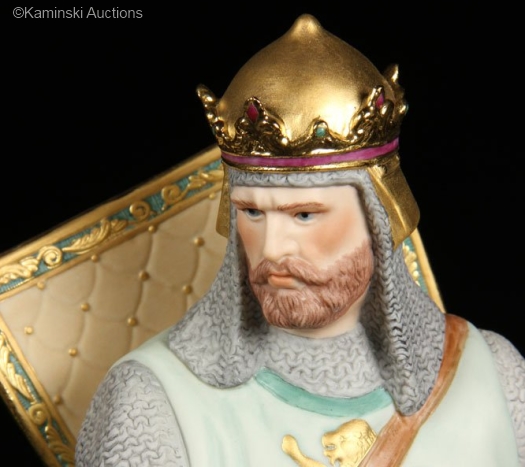 The best known is Sir Henry, the Knight because Jolan was responsible for all of the incredibly fine detail of his chain mail, belt, scabbard and shield.

 The flowing folds and intricate pattern of Madam Butterfly‘s gown and obi are almost certainly Jolan’s work

 The fine detail on the robes worn by Desdemona and Richard the Lionheart stand as testament to Jolan’s talent as well.

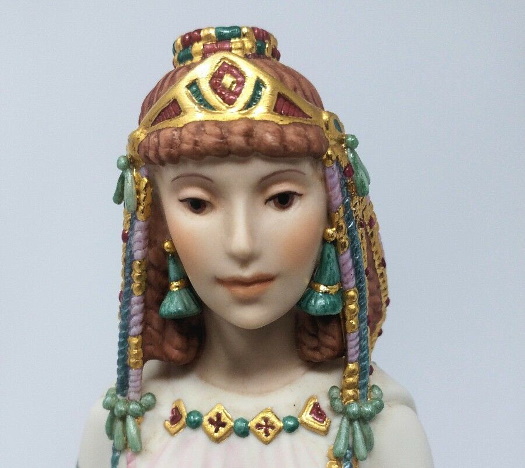
 The rendition of jewelry in porcelain also requires an expert hand, as seen in the multiple strings of beads on the Queen of Sheba and the necklace worn by Bathsheba. It is likely that Jolan worked on many of the other fine-detail-required Cybis sculptures.
Jolan Palmai at Lenox China
There is some uncertainty about the items associated with Jolan Palmai at Lenox. Although her obituary mentioned several of their figurines by name, many of those were manufactured offshore and so she could not possibly have been hands-on with the actual individual pieces, as she often was while at Cybis. When an in-house Lenox artist or a freelancer produced a final model for production, the model was given to Jolan in order for her to either create or refine the decorative details. I have no doubt that Jolan would have kept an eye on samples of the finished figurines that were being shipped back to Trenton in order to make sure that none of her fine original handwork (finishing details) were being lost during the manufacturing process.
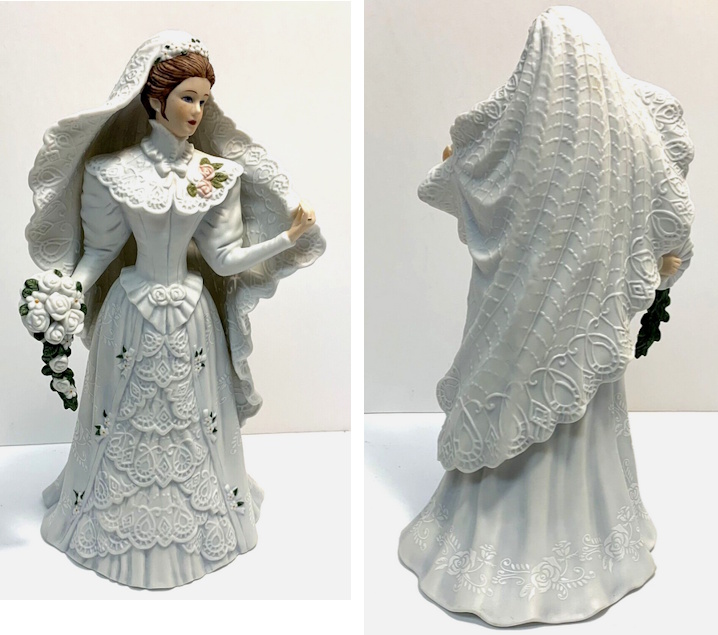 The Centennial Bride is 8.25” tall and was manufactured in Taiwan. Accompanying literature identifies this item as part of the ‘American Fashion Figurine Collection.’ Because this piece is cited as being a 1987 item, it is clear that Jolan was doing freelance work for Lenox while she was an in-house artist at Cybis. This appears to have been a multi-piece collection of annual full-color bisque figures, some of which are actually quite well made for an offshore, mass-market item. The circa-1980s figurines in this series were made in Japan but the 1990s ones, such as the Centennial Bride, were made in Malaysia and Taiwan; the quality difference is noticeable, with the Japan-made figures being of better workmanship.
 Morning Promenade is 9” tall and was made in Malaysia.
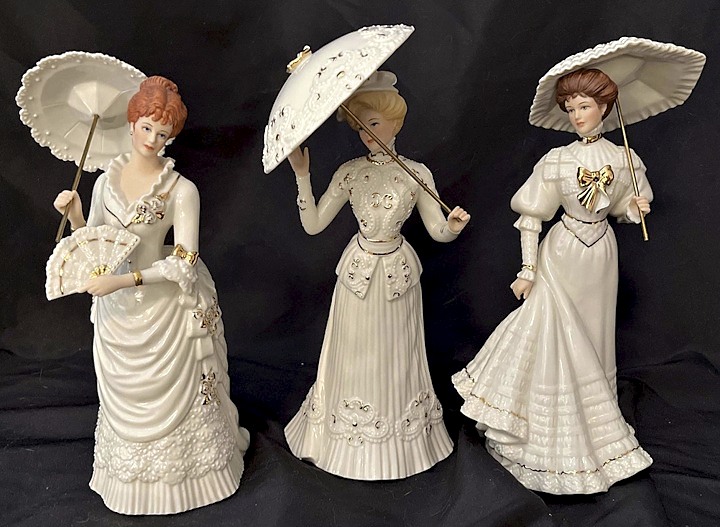 The circa-1990s series was titled ‘Victorian Ladies of Fashion’ and also included Sunday Stroll and Picnic in the Park. Other designs were added but not all of them had the same high-relief details seen on these three, which may have been among the first of that series. The workmanship of the other two pieces is so similar to Morning Promenade (center) that it’s likely they were Jolan’s work as well. The parasols were shipped as separate accessories, unlike the one that the Cybis Madame Butterfly carries which was affixed to her hand with porcelain slip or glue and not meant to be removeable.
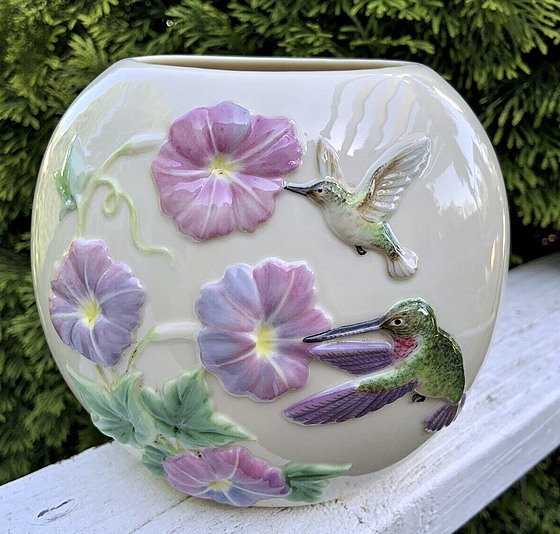
 The Hummingbird Vase is 5.25” high and was designed by Richard J. Hughes; the detail decoration and color scheme is by Jolan Palmai. These vases were cast in the USA (probably at Lenox), shipped to Hungary to be painted, and then shipped back to the USA for distribution. The autographed underside identifies this as an edition of 50. Lenox also produced this same vase mold in plain white with a thin gold rim (no other decoration) as part of a ‘Four Seasons Vase Collection’; the underside backstamp identifies this one as ‘Summer – the Hummingbird and Morning Glory’. They are undated, marked as being made in the USA, and can be readily found on eBay.


We see the same situation with the Chickadee Vase, although for these the painting was done in China and the limited signed quantity is 200. This 8.5” vase was also part of the unpainted Four Seasons Vase collection, this design being Autumn.
A quick search for ‘Lenox Four Seasons Vase’ brings up a Spring design of mourning doves within dogwood branches, and a Winter design of cardinals amid holly. I was not able to find any photos of signed Hughes/Palmai counterparts of those, but there was a no-longer available Facebook post describing a “hand painted cardinal vase created by Lenox master sculptor Richard Hughes and hand painted by master artist Jolen [sic] Palmai, issued in a limited edition of 100”. This shows that there must have also been a painted/limited version of the Spring vase as well.
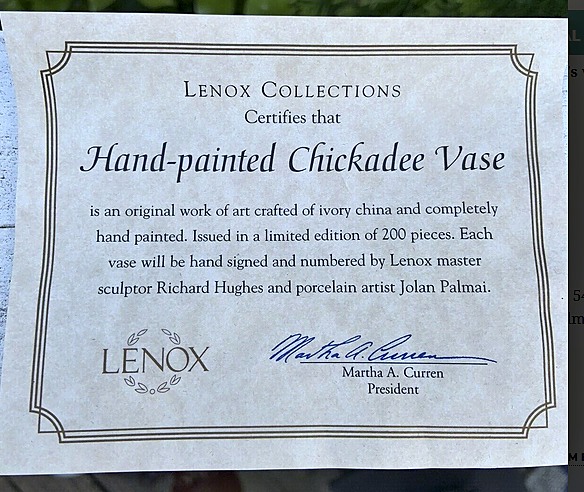 The all-white versions are identified on the underside as being part of the Four Seasons set and with an expanded name, whereas the limited-edition ones were sold as Chickadee Vase, Hummingbird Vase, Cardinal Vase, and Doves Vase. None of these vases are dated but must have been produced during the 1990s.
 The COA for this crystal vase, titled Nature’s Palette Butterfly Vase, states that it is
an original design by Jolan Palmai, crafted of full-lead crystal and painted by hand. Issued in a single edition limited to 500 works.
The glass is identified by a round sticker as being made in Slovenia and then decorated (hand painted) in Romania.
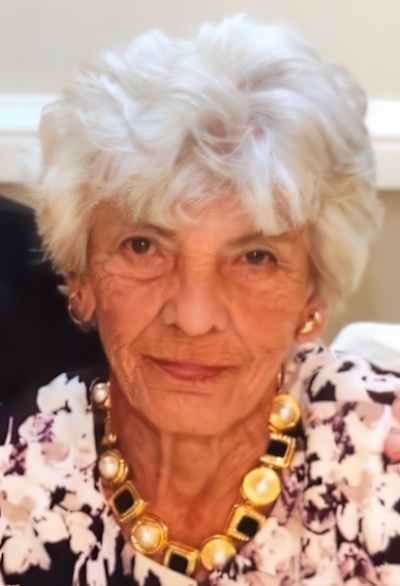 The surviving Cybis artists recall Jolan as being a very talented artist who was pleasant to work with but could also be firm when she had to be. She was devoted to her craft but also to her family. I attempted to obtain more extensive information about her life and work from her surviving family members, but never received any replies.
Browse all of the Cybis Artist Profiles
Name Index of Cybis Sculptures
Visual Index (for human figures/busts only)
About the Cybis Reference Archive
What is Cybis?
Images of Cybis porcelains are provided for informational and educational purposes only. All photographs are copyrighted by their owner as indicated via watermark and are used here only as reference material. Please see the Copyright Notice in the footer and sidebar for important information regarding the text that appears within this website.
The Cybis Archive provides the most comprehensive range of information about Cybis ever compiled within a single source. It is not and never has been part of the Cybis Porcelain studio, which is no longer in business.
 THE CYBIS ARCHIVE